 See What’s Possible for My Space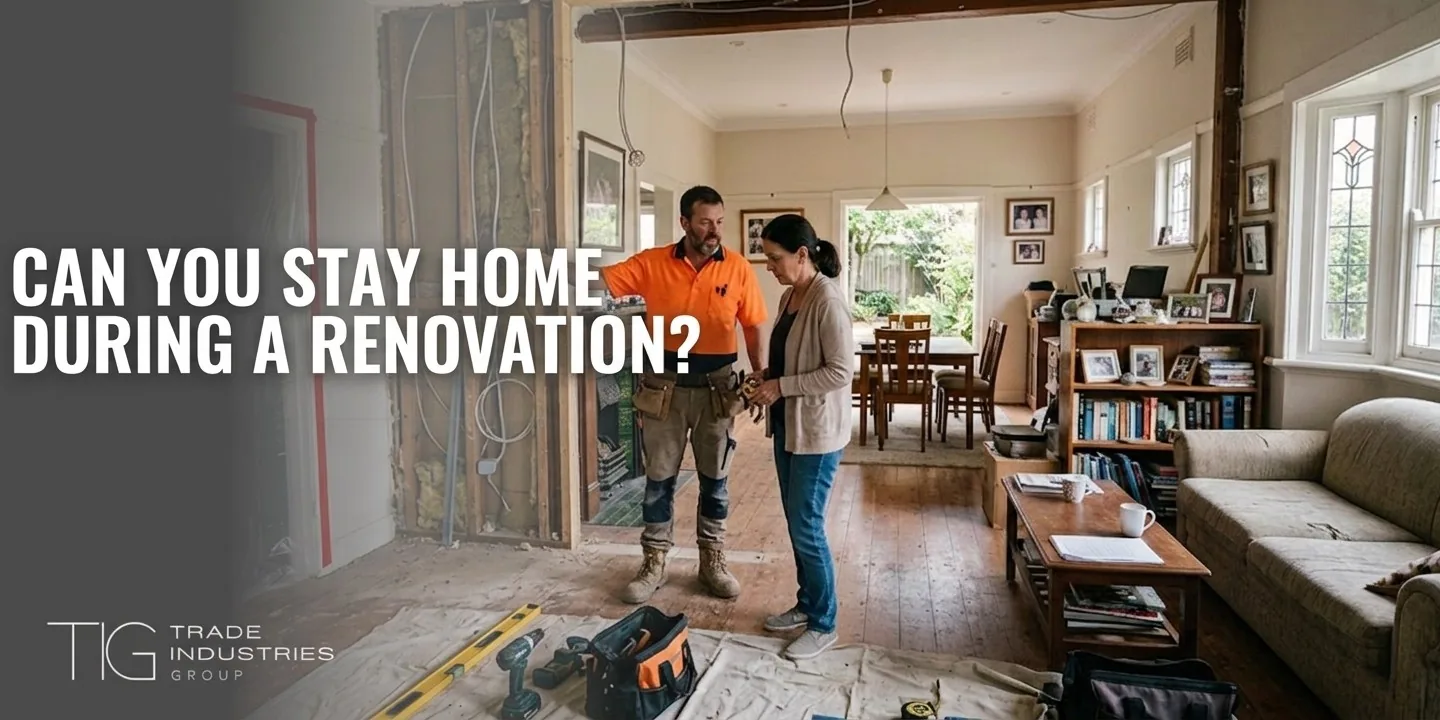
Share This Post
Whether living at home during a renovation is realistic depends on safe separation of the work area, access, essential services and the scope of work planned, not on the size of the job alone. It becomes far harder to manage once several rooms are out of action at the same time, particularly during an extensive full-house renovation in an older Sydney property. Confirm arrangements with your builder before work starts, and allow for temporary relocation during particular stages if the work affects essential facilities.
Living at Home During a Renovation: What It Actually Means Day to Day
Living at home during a renovation means continuing to sleep, cook, wash and go about your normal household routine in the property while building work happens around you, instead of moving into temporary accommodation for the length of the project. It suits contained jobs such as a single bathroom or kitchen far better than work that touches several rooms or the whole house at once. Trade Industries Group’s own full-house renovation projects typically run from three to twelve months, and that period covers planning, obtaining permits and the actual construction work, not just the time spent living around active building work. TIG notes that homeowners may need to arrange temporary accommodation once a renovation reaches full-house scale, since living through a project that size is different to living around one contained room.
When Does It Make Sense to Stay, and When Should You Move Out?
Whether staying in the property while living at home during a renovation is realistic depends on scope, staging and which essential services remain available, not the project’s overall size alone.
A single bathroom renovation, where at least one other bathroom stays usable, is one of the easiest jobs to live around. A kitchen-only renovation is manageable with a temporary setup, such as a kettle, microwave and small fridge in another room, while the kitchen itself is out of action. Once several rooms are affected at the same time, or a project moves into full-house renovation territory, the practical case for staying at home gets much weaker, and temporary accommodation for particular stages is worth planning for.
For a full breakdown of what is realistic to live around by room type, and how the answer changes for apartments with strata set work hours, see our guide on how long a home renovation takes, which covers that decision in detail. This guide focuses on what to do once you have decided to stay.
| Renovation Scope | Realistic to Stay at Home? | What Changes for You |
| Single bathroom (others available) | Usually yes | Short-term use of another bathroom, work area separated to limit dust |
| Kitchen-only | Manageable with planning | Temporary kitchen setup in another room |
| Several rooms at once | Depends on staging | Ask your builder whether the work can be staged room by room |
| Full-house renovation | Often difficult | Temporary accommodation is worth planning for |
| Apartment or unit | Depends on layout, available facilities and building rules | Strata set working hours can create predictable quiet periods, confirm with your strata committee |
Managing Dust and Noise While the Work Is Underway
Dust and noise are the two things homeowners notice most while living at home during a renovation, and both can be reduced with the right preparation.
Separating the work area from the rest of the house, for example with taped plastic sheeting over doorways and floors, helps reduce dust spreading into the rooms you are still using day to day. The right controls depend on the work involved. SafeWork NSW recommends wet dust suppression, on-tool dust extraction and isolating dusty areas for cutting, drilling or grinding work, rather than sheeting alone. Ventilation also needs proper consideration, since simply covering every vent can create its own problems; ask your builder what dust control plan suits your specific job. Builders also have to keep noisy work within set hours. The City of Sydney’s own construction site noise guidelines set standard hours of 7.30am to 5.30pm on weekdays and 7.30am to 3.30pm on Saturdays outside the city centre, with no work on Sundays or public holidays. These are the standard hours for that council area outside the city centre; project-specific conditions, such as particularly noisy machinery or works needing a street closure, can modify permitted hours through the development approval process, and they are not universal hours across Greater Sydney. Check your own local council’s requirements if your renovation is outside the City of Sydney area.
Homes built before the late 1980s may contain asbestos, and any suspected material should be assessed by a licensed professional before it is disturbed by wall, ceiling or flooring work. SafeWork NSW recommends using a licensed asbestos professional to assess and remove asbestos-containing materials rather than attempting this yourself, since disturbed asbestos releases fibres that are a health risk to everyone in the house, not only the person doing the work. Asbestos NSW notes that a licensed professional can advise on how to protect everyone’s health and help the work proceed safely, which includes anyone still living in the home while it is carried out. This is a common issue in Sydney’s older housing stock, including Federation cottages, terraces and 1960s brick veneer homes, not a rare edge case.
Keeping Kids, Pets and Vulnerable Household Members Safe
Keep children and pets out of active work areas, even in a home that is otherwise liveable. A clearly marked construction zone, with the work area sealed and a locked door or barrier where possible, reduces the chance of anyone wandering into an area with exposed wiring, tools or dust. Pets in particular can be unpredictable around tradespeople and open doors to the street, so a separate secure space away from the work area, with food, water and bedding, is worth setting up before work starts each day. If your home is an older Sydney property, it may have lead-based paint under later layers, and NSW Health advises against allowing children, pregnant women or breastfeeding mothers in a house or area where lead-based paint is being disturbed.
Keeping a Functioning Kitchen and Bathroom While Building Work Continues
A temporary kitchen and at least one working bathroom are usually the two things that make living at home during a renovation manageable, even when the kitchen or bathroom itself is the room being renovated. For a kitchen renovation, a temporary setup in a garage, dining room or laundry, with a kettle, microwave, toaster and a small fridge, covers most day-to-day meals while the real kitchen is out of action. For a single bathroom renovation where the house has more than one bathroom, the rest of the household can generally continue as normal with the work area separated off. Where a home only has one bathroom, or the renovation includes every bathroom in the house, that is the point where temporary accommodation, a portable facility, or a short-term stay elsewhere becomes worth planning for rather than assuming you will manage.
Working With Your Builder So Living at Home Stays Manageable
Clear, regular communication with your builder about the week’s work, access needs and any changes to the program is what keeps living at home workable through a longer renovation. Trade Industries Group’s own process starts with a Discovery Call to understand your home and goals, followed by an Onsite Strategy visit, a Scope Clarification stage, and a Tailored Plan Walkthrough that sets out the proposed work, timelines and costs before construction begins. Raise questions about staging, access and daily disruption during planning, before construction begins, for example by booking a site visit with TIG’s team. During construction, TIG’s team manages the build, communication and quality checks through to handover.
A short checklist can make that planning conversation more useful. Before work starts, confirm with your builder:
- Any planned interruptions to water or power, and how much notice you will get
- Safe access routes through the house while work is underway
- Temporary washing-up facilities if the kitchen will be out of action
- Cleaning arrangements at the end of each work day
- The main contact person for questions once construction begins
- Whether and when you will need to leave the property for any particular stage of work
Living at Home During a Renovation Comes Down to Planning, Not Luck
Living at home during a renovation is genuinely workable for most single-room and staged renovation projects, and much harder to manage for an extensive full-house renovation, especially in an older Sydney home. The deciding factors are the scope of the work, how well dust and noise are managed, and how clearly your builder communicates the program as it progresses. Getting these right from the start of the project is what separates a renovation you can live around comfortably from one that pushes a household to look for somewhere else to stay.
Thinking It Through Before Your Renovation Starts?
If you are planning a renovation and trying to work out whether living at home during a renovation will actually be manageable for your household, Trade Industries Group can walk you through what to expect for your specific home and scope of work, or you can view stunning projects to see completed examples of TIG’s renovation work across Sydney. No pressure. No jargon. Just straight-up advice on what’s possible.
Call 0468 013 922, email Admin@tradeindustriesgroup.com.au, or request a consultation.
Frequently Asked Questions
1. How Do You Live in a House That’s Being Renovated?
Living in a house during a renovation works best when the work area is separated from the rest of the home to help reduce dust spreading, for example with plastic sheeting and taped doorways, and when at least one bathroom and a temporary kitchen setup stay usable throughout. It becomes harder the more rooms are affected at once, which is why staging the work room by room, rather than opening up the whole house together, makes the biggest practical difference.
2. Is It Normal to Feel Overwhelmed During a House Renovation?
Yes, feeling overwhelmed during a renovation is a common reaction to ongoing noise, dust and disruption to daily routines, and it does not necessarily mean something has gone wrong. Setting clear boundaries around quiet areas of the house, keeping a predictable daily routine where possible, and staying in regular contact with your builder about the week ahead all help reduce that feeling over the course of a longer project.
3. What Are the Biggest Home Renovation Mistakes to Avoid?
The most common mistakes homeowners make while living through a renovation are failing to properly separate the work area to limit dust and disruption, underestimating how long a full-house project will disrupt normal routines, and not raising access or noise concerns with the builder until they have already become a problem. Addressing these early, before construction starts, avoids most of the friction that builds up over a longer renovation.
4. What Is the Hardest Room to Renovate While Still Living in the House?
Kitchens and a home’s only bathroom can be particularly disruptive, and the biggest challenge depends on which essential facilities remain available rather than the room’s size. A kitchen affects daily meal preparation for the whole household, while a home’s only bathroom affects everyone’s ability to wash and use the toilet normally, so the number of usable bathrooms and any temporary kitchen setup usually matter more than the overall size of the renovation.
5. How Do You Survive a House Renovation Without Moving Out?
Surviving a house renovation without moving out generally comes down to three things: separating the work area properly to help reduce dust and noise, setting up a temporary kitchen or bathroom arrangement for whichever room is out of action, and keeping regular communication with your builder about the program so changes can be discussed early. Renovations that are staged room by room, rather than opened up all at once, are consistently easier to live through.
 Home Extension Approval Sydney: DA, CDC or Exempt, and What Each One Means
 Fixed Price Renovation Contract Sydney: What to Check Before You Sign
About the Author: Trade Industries Group