 See What’s Possible for My Space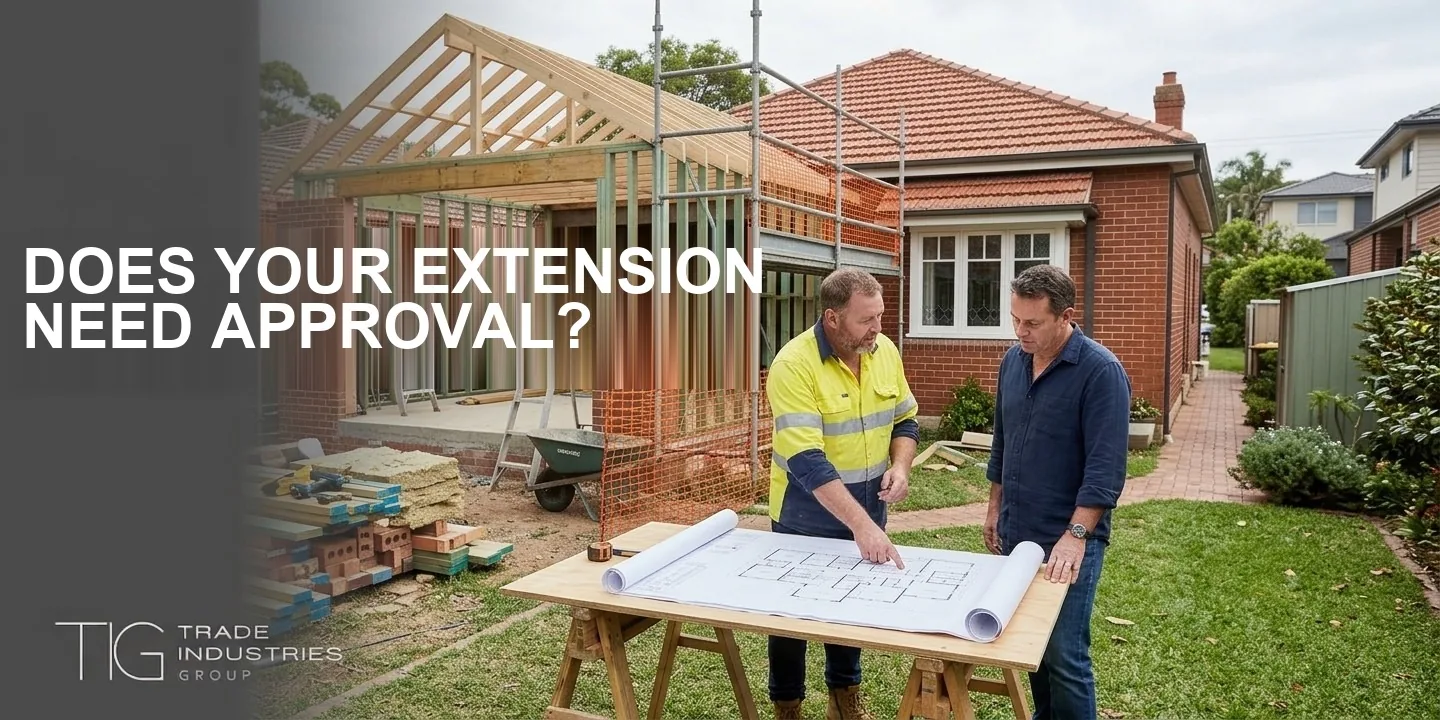
Share This Post
Home extension approval Sydney rules place most projects into one of three pathways: exempt development, a Complying Development Certificate, or a Development Application through council. Which one applies depends on the size, position and site conditions of your extension, so it is worth confirming the pathway before the design is finalized.
Home Extension Approval Sydney: Why the Pathway Matters Before You Design
Getting home extension approval in Sydney can feel confusing, because there is no single process. Some small changes need no approval at all, others can be fast-tracked, and larger or more complex extensions go through a full council assessment. Choosing the wrong pathway, or assuming your project fits one when it does not, can mean redesigning after the fact.
The worry behind this is usually timing and certainty. You want to know how your project will be assessed, who assesses it, and whether anything about your block, such as a heritage listing, changes the answer, before you commit to a design.
What Are the Three Approval Pathways for a Home Extension in Sydney?
There are three approval pathways for building work in NSW, and a home extension can fall into any of them depending on its scope. Which pathway applies to your extension depends on its size, position on the block and how it affects the existing dwelling, not on how the work is described in conversation with a builder.
Exempt development does not need planning or construction approval from a council or private certifier, and applies to minor, low-impact work, provided the work meets every development standard set for it under state planning policy. An approval-free pathway is not an unregulated one, so work that falls outside those standards moves onto one of the other two pathways instead.
Complying development is a fast-tracked application process that combines planning and construction approval for straightforward residential development, and these approvals are determined by council or an accredited certifier without a full development application, if the proposal meets specific development standards.
Local development, assessed through a Development Application, is the most common type of development in NSW and covers anything from home extensions to larger commercial projects, with consent issued by the consent authority, usually the local council.
| Pathway | What it covers | Who decides |
|---|---|---|
| Exempt development | Minor, low-impact work that meets the exempt development standards | No approval required |
| Complying Development Certificate (CDC) | Straightforward extensions that meet set development standards | Council or an accredited certifier |
| Development Application (DA) | Extensions that do not meet CDC standards, or more complex projects | The consent authority, usually the local council |
In short, home extension approval Sydney projects move through whichever of these three pathways matches their scope, and a project can only use the faster pathways if it meets the set standards for them. Your council or an accredited certifier can confirm which pathway your specific site and design fall under.
What Can Qualify as Complying Development for a Home Extension?
Some internal and external alterations to an existing house can be carried out as complying development if they meet the relevant standards, which is why many straightforward extensions use this pathway. Internal changes, such as new openings, doors and changes to the internal floor layout, can qualify, and some external alterations to an existing dwelling and its ancillary development can as well. Converting existing attic space into a room can also be carried out as complying development if the proposal meets the relevant standards.
Heritage status changes the answer, and the two situations are treated differently. If the dwelling itself is a listed heritage item, whether on the State Heritage Register or listed locally in council’s planning controls, complying development generally cannot be used at all, and the extension needs a Development Application instead. A heritage conservation area is a separate, more limited restriction: if the dwelling is in a heritage conservation area, or a draft one, external alterations under the complying development pathway must not be made to a wall facing the primary road, or to any wall that connects to a wall facing the primary road, and must not increase the height of the dwelling. If your home is heritage listed or sits in a conservation area, confirm which situation applies with your council before assuming complying development is available, since a heritage listing can move an otherwise straightforward extension onto the Development Application pathway instead.
Bushfire-prone land, flood-affected land and environmentally sensitive land can also change what complying development allows. Land with a high bushfire risk rating, and any part of a flood control lot outside a council or engineer-certified building envelope, generally cannot use the complying development pathway, and other bushfire-prone or flood-affected blocks may carry extra conditions even where complying development is available. Check these constraints with your council alongside the heritage check.
When Does a Home Extension Need a Development Application?
A home extension needs a Development Application when it does not meet the standards for complying development, or when the project is more complex than the complying development pathway is designed for. A Development Consent application is a formal request for approval to carry out a development, and development consents are issued by the consent authority, which is usually the local council. Because a DA is assessed individually rather than against a fixed set of standards, it gives more flexibility for a design that does not fit the complying development rules, at the cost of a more involved assessment. An extension that changes the footprint of the home in a way the complying development standards do not cover, sits close to a boundary in a way that needs individual assessment, or affects a heritage item beyond what the complying development pathway allows, is likely to need a DA rather than a CDC. Your council can confirm which pathway your specific extension needs before the design is finalized.
What Should You Check Before You Commit to a Design?
Confirm these before your extension design is finalized, because each one can change which pathway applies to your home extension approval in Sydney. Each Sydney council also has its own Local Environmental Plan and Development Control Plan, which can set additional rules for setbacks, height and site coverage on top of the state-wide pathway you use.
- Does your home sit in a heritage conservation area, or a draft one?
- Is your block bushfire-prone, flood-affected, or on environmentally sensitive land?
- Does the extension involve external alterations, or only internal changes such as new openings or a changed floor layout?
- Will the extension increase the height of the dwelling?
- Does your council have any local planning controls beyond the standard NSW pathways?
The NSW Government’s guide for homeowners links to a guide on preparing a development application, and to guidance on what to tell your neighbours, as part of the approval process.
Home Extension Approval Sydney: Confirming the Right Pathway
Approval for a home extension in Sydney comes down to matching the project to the right pathway: exempt, complying development, or a Development Application. The fastest route is not always available, and heritage status or the scale of the work can move a project from one pathway to another. Confirm the pathway with your council or an accredited certifier before the design is locked in, so the drawings are prepared for the assessment your project will actually go through.
Ready to Talk Through Your Extension? Let’s Map Out the Approval Path Together
Every TIG project starts with a consultation and an onsite visit. We walk through your home, your goals and the possibilities and potential challenges, confirm the scope, and present a tailored renovation plan before any contract is finalized. If your project is a ground floor extension, our team can guide you through the approval process as part of that plan. TIG is a licensed and insured Sydney renovation contractor. Call 0468-013-922 or email Admin@tradeindustriesgroup.com.au. No pressure. No jargon. Just straight-up advice on what’s possible. Check Your Renovation Possibilities
Frequently Asked Questions
1. Do I need council approval to extend my house in Sydney?
It depends on the scope of the extension. Some minor work is exempt development and needs no approval, straightforward extensions can often use a Complying Development Certificate, and larger or more complex extensions need a Development Application through council. Confirm which pathway applies before the design is finalized.
2. What is the difference between a CDC and a DA for a home extension?
A Complying Development Certificate is a fast-tracked approval issued by council or an accredited certifier when a project meets set development standards. A Development Application is a formal request assessed individually by the consent authority, usually the local council, and applies when a project does not meet those standards or is more complex.
3. Can I extend a heritage-listed home in Sydney?
It depends on whether your home is a listed heritage item or sits in a heritage conservation area, since the two are treated differently. If the dwelling itself is a listed heritage item, state or local, complying development generally cannot be used, and the extension needs a Development Application instead. If the dwelling is only within a heritage conservation area, complying development can still apply, but external alterations must not affect a wall facing the primary road and must not increase the height of the dwelling. Confirm which situation applies with your council early, since it changes which pathway is available.
4. Does an attic conversion need approval?
Converting existing attic space into a room can be carried out as complying development if the proposal meets the relevant standards. If it does not meet those standards, it would need a Development Application instead.
5. Who assesses a Development Application for a home extension?
Development consents are issued by the consent authority, which is usually the local council, though the Minister for Planning acts as the consent authority in some cases set out under a State Environmental Planning Policy. Your council can confirm who assesses your specific application.
 Design and Build Renovations Sydney: How It Compares With an Architect Plus Builder
 Living at Home During a Renovation: A Practical Guide for Sydney Homeowners
About the Author: Trade Industries Group