See What’s Possible for My Space
Share This Post
Some cosmetic internal renovations in NSW may qualify as exempt development when every applicable standard under the State Environmental Planning Policy (Exempt and Complying Development Codes) 2008, called the Codes SEPP, is met. Other alterations may require a Complying Development Certificate (CDC), while work outside that pathway may need a Development Application (DA) followed by a Construction Certificate. Council approval for internal renovations NSW homeowners need depends on what the work changes and the rules that apply to your property. Strata approval, trade licensing and safety obligations are separate and may still apply.
Key Takeaways
- Some cosmetic and non-structural work can be exempt from development, so council approval for internal renovations NSW is not always required.
- Structural changes may qualify for a CDC or need a DA and a Construction Certificate, depending on the proposal.
- Heritage listing, conservation areas and planning overlays can affect internal work, so check them before you start.
- Apartment owners may need owners corporation approval, depending on whether the work is cosmetic, minor or major. This is separate from any planning or building approval.
- Exempt work must still meet the National Construction Code, licensing rules and trade compliance requirements.
- Under the Home Building Act 1989, a contractor licence and written contract are generally required above $5,000, and Home Building Compensation insurance generally applies above $20,000.
What does “exempt development” mean for internal renovations in NSW?
Exempt development is minor work that the law allows without council or certifier approval, as long as every set condition is met. It is the lowest level of regulation in the NSW planning system. Council approval for internal renovations NSW is not required when the work genuinely qualifies as exempt.
Exempt development NSW internal renovations can include work like painting, replacing flooring, swapping cabinetry and updating fixtures. The conditions matter. The work must not affect the structure of the building, fire safety or the safety of the people using it. Exempt also does not mean unregulated. The work must still meet the National Construction Code, and licensed trades are still required for plumbing and electrical.
The current standards are set out in the NSW Government guidance on exempt development.
When does non-structural internal work need council approval?
Non-structural internal work may need approval when a rule specific to your property applies. Those rules sit outside the work itself. They come from where the home is and what it is.
The most common triggers are heritage controls and planning overlays such as flood or bushfire. Your council’s Local Environmental Plan (LEP) is an environmental planning instrument that sets these out. It is the local rulebook that controls what can be built or changed in each area.
Heritage controls vary according to the property’s listing, location and the proposed work. Being in a conservation area does not automatically mean every internal renovation needs consent. State Heritage Register properties and properties under an interim heritage order have specific restrictions, while local listings and conservation areas must be checked against the relevant LEP and development controls. Before starting, check the NSW Heritage database, your LEP and your council’s development controls. That is the safest way to confirm whether non-structural internal work council approval applies to your home.
Do structural changes need council approval in NSW?
They often need formal approval, but the pathway depends on the proposal. A structural change is anything that alters how the building carries its weight. Examples include removing a load-bearing wall, adding a second storey or opening up a floor plan in a way that changes the load path.
A load-bearing wall is a wall that holds up the roof or the floor above. You cannot tell by looking at it, which is why a structural engineer needs to confirm it. Structural work may qualify for a CDC, or it may need a DA and then a Construction Certificate before building begins. Both pathways come from the Environmental Planning and Assessment Act 1979.
For homeowners planning a major renovation, working out council approval for internal renovations NSW rules and the right pathway is usually the first question to settle. It shapes the design, the documents needed and the order of work.
What is a Complying Development Certificate for interior upgrades?
A Complying Development Certificate (CDC) is a combined planning and building approval for work that meets fixed, pre-set standards. It can be issued by a council or a registered certifier. A certifier is a qualified professional who checks that plans comply with the rules. The owner appoints the certifier.
For Complying Development Certificate (CDC) interior upgrades, the process works like this. The certifier checks your plans against the Codes SEPP and the National Construction Code. If the proposal does not meet every applicable CDC standard, it may need to be redesigned or assessed through a DA.
A CDC is generally quicker than a DA because the rules are fixed and it does not go through the full DA merit assessment. Statutory notices and work notifications may still apply, though. Its availability depends on your property and your plans, so check with your council, a registered certifier or an appropriate planning professional. They can confirm how council approval for internal renovations NSW rules apply to your project.
What is a Development Application, and when does it replace a CDC?
A Development Application (DA) is a full council assessment, used when a project does not fit the fixed standards of a CDC. Council reviews the proposal on its merits, which can include neighbour notification and conditions of consent.
A DA is more likely when a design falls outside CDC standards, when heritage controls apply or when overlays limit what can be done. If a DA is required, development consent is generally followed by a Construction Certificate before work begins. Council approval for internal renovations NSW through a DA takes longer, so it is worth knowing early. Planning for it from the start avoids redesigns and delays later.
Do strata and apartment renovations need different approval?
They can. Apartment owners may need owners corporation approval even when no council approval is required. Strata approval is a separate layer. It comes from the Strata Schemes Management Act 2015 and your scheme’s by-laws, not from council.
NSW strata rules divide work into tiers:
- Cosmetic work may not need approval, subject to the scheme’s by-laws.
- Minor renovations generally need approval from the owners corporation, commonly by ordinary resolution.
- Major work involving structure, waterproofing or other regulated work generally needs a special resolution, which is a higher voting threshold.
Bathroom waterproofing is identified as major work. Some kitchen cabinetry, hard flooring and internal-wall alterations may fall under minor renovations. Whether an element is common property depends on your strata plan and by-laws, so walls, membranes and waterproofing are not classified the same way in every building. Strata approval does not replace any planning, building or trade approvals, which means council approval for internal renovations NSW rules and strata approval can both apply to the same project.
Which licensing and compliance rules still apply to exempt internal work?
Licensing, safety and insurance rules apply even when no planning approval is needed. Council approval for internal renovations NSW is only one part of compliance.
Under the Home Building Act 1989, a contractor licence is generally required where residential building or trade work exceeds $5,000, including labour and materials. A written contract is required for work exceeding $5,000 including GST. Home Building Compensation insurance generally applies to covered residential building work exceeding $20,000 including GST. Building Commission NSW regulates the building sector, and Home Building Compensation insurance is administered through the NSW insurance framework. Thresholds can change, so check the current figures before signing a contract.
Other rules apply as well:
- Electrical and plumbing work must be done by licensed trades, who issue compliance certificates.
- Bathroom waterproofing must meet Australian Standard AS 3740.
- In older homes, SafeWork NSW rules apply if asbestos is present. Friable asbestos must be removed by a Class A licensed asbestos removalist. More than 10 m² of non-friable asbestos must be removed by a Class A or Class B licensed removalist.
Exempt, CDC or DA for internal renovations
| Pathway | What it is | Typical internal work | Who approves | Relative timing |
|---|---|---|---|---|
| Exempt development | Minor work allowed without approval, if every condition is met | Painting, flooring, cabinetry, fixtures, non-structural updates | No planning or building approval needed if all conditions are met | Start when ready |
| CDC | Fast-track approval for work meeting fixed standards | Some alterations and larger interior upgrades that meet every standard | Council or registered certifier | Shorter than a DA |
| DA | Full council assessment on merit, followed by a Construction Certificate | Work outside CDC standards, heritage-sensitive or complex projects | Local council (Construction Certificate by council or registered certifier) | Longest pathway |
Timing varies by project, council and certifier. Confirm the pathway for council approval for internal renovations NSW with your council or a registered certifier.
What should you do before starting an internal renovation in Sydney?
Confirm your property’s status and your scope of work before any demolition. The answer on council approval for internal renovations NSW should be confirmed with your council, a registered certifier or an appropriate planning professional. Your builder can help you prepare the scope, but should not be the one who determines the approval pathway.
Follow these steps in order:
- Check your property’s zoning, heritage and overlay status using the NSW Heritage database, your LEP and the NSW Planning Portal.
- Have a structural engineer confirm which walls are load-bearing.
- If you live in an apartment, read your strata by-laws and speak with your strata manager.
- Confirm the approval pathway (exempt, CDC or DA) with your council, a registered certifier or a planning professional, and appoint the certifier yourself where one is needed.
- Confirm your builder’s licence using the Service NSW licence check before signing.
For larger projects such as full-home renovations, extensions and second-storey additions, this sequence protects your timeline. Approval questions answered early mean the design, engineering and building stages follow in the right order.
Plan Your Sydney Renovation With Confidence
Not sure how council approval for internal renovations NSW rules apply to your project? Trade Industries Group can discuss your proposed renovation scope and identify when advice from a council, registered certifier, strata specialist, engineer or other qualified professional may be required before construction. Explore our home renovation services or book a consultation.
Frequently Asked Questions
1. What should I prepare before contacting a builder?
What you want to achieve, any existing plans or surveys, photos of the areas involved, your property address and whether it is heritage-listed or in a strata building, and the timeframe you have in mind. You do not need a finished design. A clear idea of your goals and priorities helps a builder tell you what is realistic.
2. Do I need plans before I speak to a builder?
Not always. Some homeowners bring completed drawings to price, and others start with a discovery conversation to decide between a separate designer and a design-and-construct team. If you have not yet chosen a designer, speaking to a builder early can help you understand how design decisions affect cost and approvals.
3. How do I check a builder’s licence in NSW?
Checking a builder’s licence is essential before signing a contract or paying a deposit. Ask for the builder’s legal name, licence number and ABN or ACN, then search the licence number on the Service NSW licence check. Confirm that the status is current, the licence class covers your type of work, any conditions are acceptable, and the name matches the contract entity exactly.
A licence check does not confirm insurance. Ask for the home building compensation certificate (where required) and other insurance certificates, and check those documents separately.
4. How do I compare allowances between quotes?
Ask each builder to list every allowance and provisional sum, what it covers and how the amount was set. Compare them item by item: tiles, appliances, joinery, fixtures and site costs. If one quote is lower, check whether the allowances are lower too, because the gap can come back later as a variation.
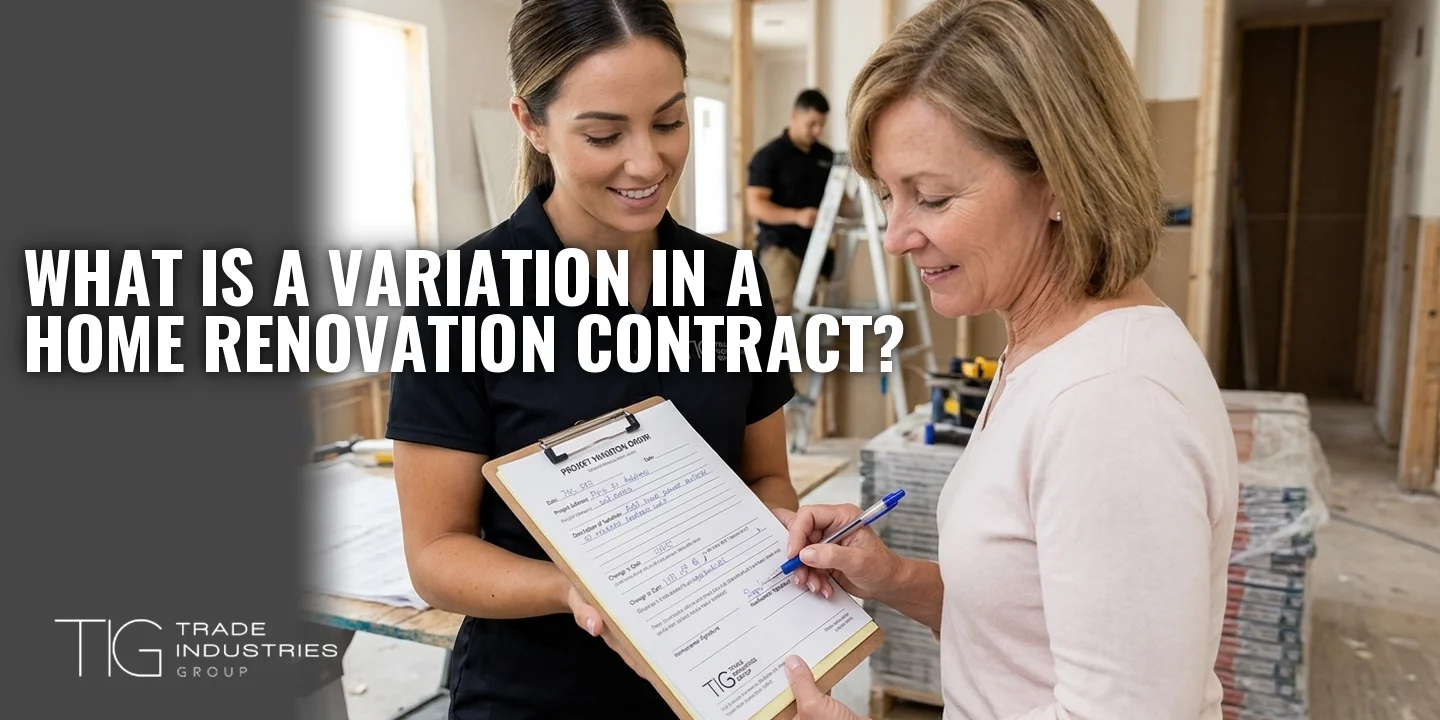
5. How are variations handled?
A variation is a written change to the agreed scope or price. It can be requested by you, or arise from unforeseen conditions or approval requirements. Ask how the builder prices and documents variations, and agree in writing before the extra work proceeds.
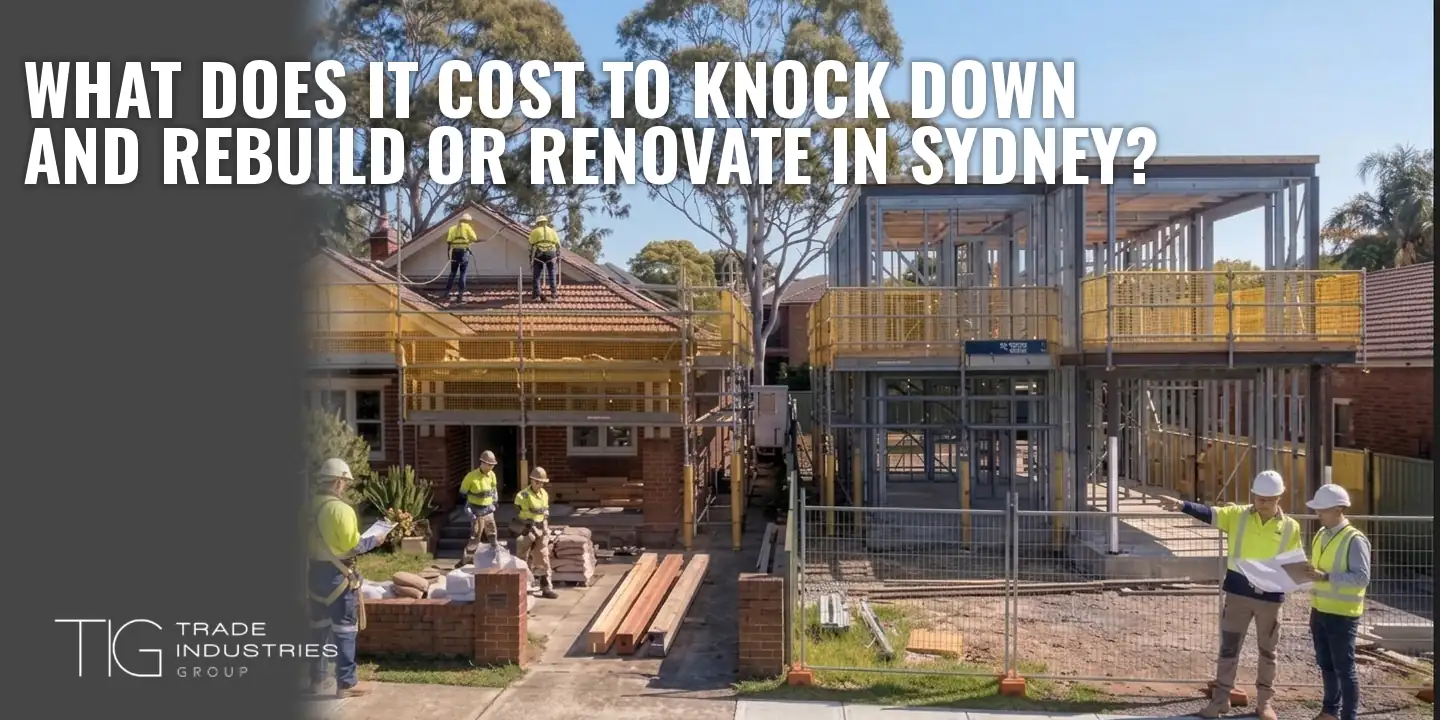
6. Is it better to knock down and rebuild or renovate?
The answer depends on the condition of the existing structure, your budget, the site, approvals and how much of the original home you want to keep. Choosing between a knock down and rebuild and a renovation is best tested with a site visit and a scoped assessment. A rebuild offers more layout freedom, while a renovation can keep character features and existing structure, but may reveal hidden conditions once walls are opened.
7. Do I need to move out during a renovation?
It depends on the scope, safety, access to services such as water, power and bathrooms, and how disruptive the work is for your household. Staging the work may be possible on some projects but not others. Discuss living arrangements with your builder early, before the contract is signed.
 Do I Need Plans Before I Speak to a Builder in Sydney?
 How Are Variations Handled in a Home Renovation?
About the Author: Trade Industries Group