 See What’s Possible for My Space
Share This Post
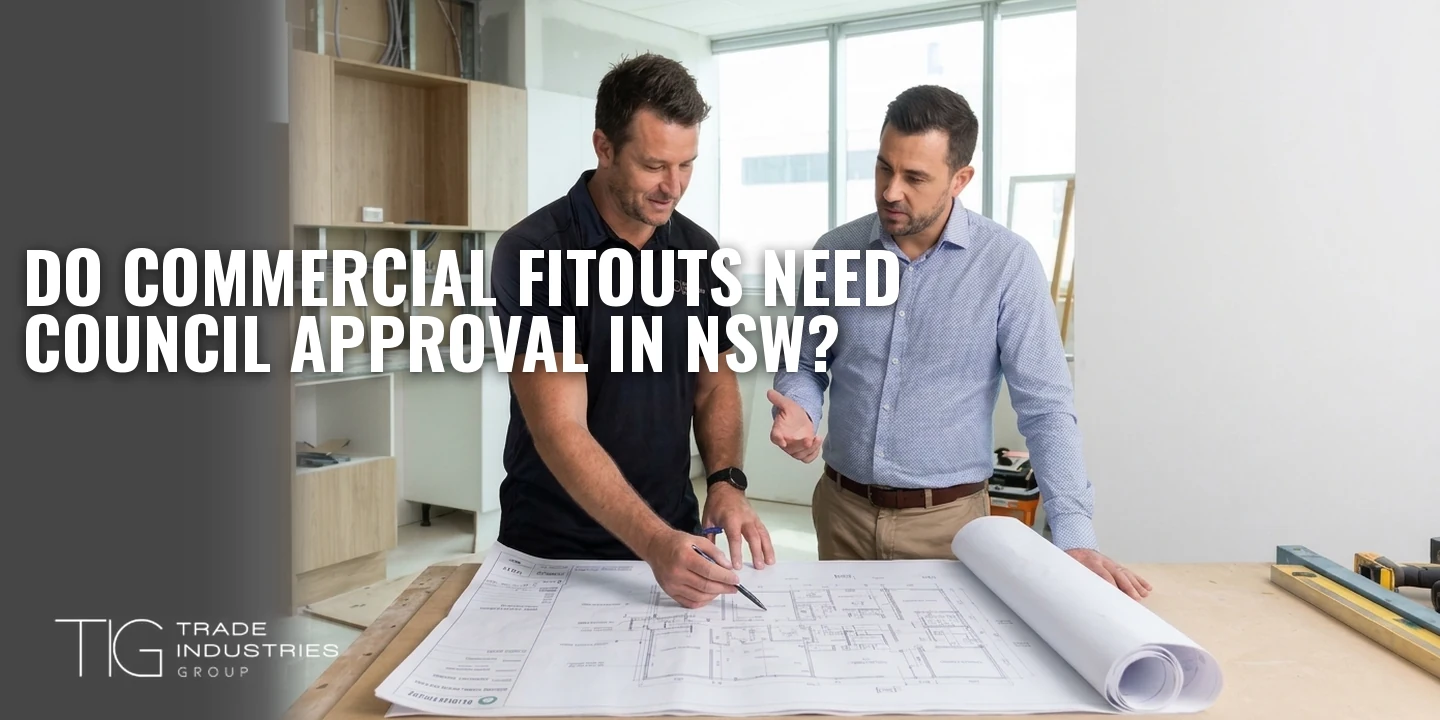
Do commercial fitouts need council approval in NSW? Sometimes they do, and sometimes they don’t, so it’s worth checking before you get started. Small internal jobs that meet strict conditions are called “exempt development”, which means no approval is needed at all. Bigger or more complex fitouts usually need approval through either a Complying Development Certificate (CDC), a fast-track approval issued by a private certifier or council, or a Development Application (DA), a full application assessed by your local council. Depending on the pathway, you may also need a construction certificate.
Key Takeaways
- Commercial fitouts in NSW do not always need council approval, because minor internal work can be exempt development.
- Larger or more complex fitouts usually need a Complying Development Certificate or a development application.
- A change of use, heritage status or exterior changes can push a fitout towards a DA, but a change of use does not automatically require one.
- Fire safety, structure and accessibility are checked under the National Construction Code even when planning approval is not needed.
- Depending on the pathway, a construction certificate may be needed, and an occupation certificate may be required before the space is used.
- Confirming the approval pathway before signing a lease protects your costs and your opening date.
Do Commercial Fitouts Need Council Approval in NSW if the Work Is Minor?
Not if the work qualifies as exempt development. Under the State Environmental Planning Policy (Exempt and Complying Development Codes) 2008, often called the Codes SEPP, some minor internal alterations to commercial premises need no planning approval. Cosmetic work such as repainting or replacing floor coverings often falls into this group. Exemptions always come with conditions. The work generally cannot affect structure, fire safety, accessibility or the approved use of the building, and heritage items and conservation areas can change the answer.
Exempt does not mean unregulated. Exempt work must still meet the National Construction Code, and your landlord can still refuse consent under the lease. The exact exempt provisions can change, so ask your certifier to check your job against the current rules before work starts. If a fitout touches any of the points above, it moves out of exempt development and needs approval.
When Does a Commercial Fitout Need a Complying Development Certificate?
A commercial fitout may need a CDC when it meets the fast-track standards in the Codes SEPP but goes beyond exempt work. A CDC may be suitable for straightforward alterations, such as internal changes to an existing commercial building where the approved use stays the same. It is a common route for office renovations and shop fit outs in existing buildings, though whether it is available depends on the property and the type of work.
A CDC combines planning approval and construction approval in one certificate, and council or an accredited private certifier can issue it. That usually makes it faster than a DA, but it is also rigid. The work must meet every standard. If part of your design falls outside the rules, you may need to change the design or move to a DA.
When Do Commercial Fitout DA Requirements in Sydney Apply?
A development application may be necessary when the proposed fitout falls outside exempt or complying development rules. That can happen when the work does not meet the fixed standards, the exterior changes, the property has heritage or conservation controls, or local planning controls call for council assessment.
A change of use, such as office to cafe, is a common trigger for questions. It can bring different planning and building requirements, but it does not automatically mean a DA. Some changes of use can be exempt or complying development, subject to the planning controls and conditions that apply to the property. Others need a DA. Check the zoning and the existing approved use before you commit.
A DA is lodged through the NSW Planning Portal and assessed by council under the Environmental Planning and Assessment Act 1979. It is slower and more variable than a CDC, so build that into your lease start date and opening plans.
Do Commercial Fitouts Need Council Approval in NSW for Fire Safety and Building Certification?
Planning approval and building compliance are separate checks. Even when a fitout needs no planning approval, the building work must still meet the National Construction Code (NCC), including the Building Code of Australia provisions on structure, fire safety, exits and accessibility.
Depending on the approval pathway, a commercial fitout may need a development consent and a construction certificate, or a CDC, which covers both. Work that qualifies as exempt development generally does not need either, provided all relevant conditions are met.
An occupation certificate may be required before the completed fitout or affected premises can be occupied or used. The appointed certifier should confirm the requirements before work begins. Changes to sprinklers, exits or fire separation can also trigger fire safety upgrades and updated documentation. Certifiers must be registered under the Building and Development Certifiers Act 2018, so check your certifier’s registration.
What Happens if a Commercial Fitout Goes Ahead Without Approval?
Unapproved work can lead to stop-work orders, fines and costly rectification. Councils can issue orders under the Environmental Planning and Assessment Act 1979, and landlords can hold tenants responsible for non-compliant work. Insurers may also question claims linked to unapproved building work.
Checking the approval pathway early costs far less than fixing a non-compliant space later. It also protects any project, including commercial renovations in Sydney, from rework that delays opening.
Comparison: Exempt, CDC and DA Pathways
| Pathway | Typical scope | Approval body | Relative speed |
|---|---|---|---|
| Exempt development | Minor, non-structural internal work that meets every condition | None needed (conditions apply) | Fastest |
| Complying Development Certificate | Standard internal alterations meeting set rules | Council or accredited private certifier (covers planning and construction approval) | Faster |
| Development application | Work outside exempt and complying rules, heritage, or non-standard work | Council, then a construction certificate | Slowest |
What to Check Before Starting a Commercial Fitout in NSW
Work through this list before you sign a lease or schedule any construction:
- Confirm the existing approved use of the property.
- Check whether the proposed work qualifies as exempt or complying development.
- Identify structural, fire safety and accessibility requirements.
- Obtain landlord or strata approval in writing where it applies.
- Confirm the certification process, and who your certifier is, before construction is scheduled.
Know Your Approval Path Before You Commit to the Lease
Before committing to a commercial fitout, it is important to understand the approvals and construction requirements involved. Working this out is much easier before the lease is signed, because it shapes your costs and opening date.
Trade Industries Group (TIG) is a Sydney builder that values careful planning, clear communication and a well-managed construction process. If you are planning a substantial commercial renovation or fitout in Sydney, Request a Free Consultation to discuss your project and whether it is the right fit for our services.
No pressure. No jargon. Just straight-up advice.
Frequently Asked Questions
1. Do I need a DA for an office fitout in NSW?
Not always. Many internal office fitouts can go through exempt development or a CDC, depending on the work and the property. A DA is more likely if you change the building’s use, alter the exterior, or work on a heritage property. Your certifier or council can confirm which applies.
2. How long does commercial fitout approval take in NSW?
It varies by pathway and application quality. Exempt work has no approval wait. A CDC is generally quicker than a DA, and a DA depends on council assessment times and any requests for more information. Ask your certifier or council for a current estimate.
3. Can a private certifier approve a commercial fitout in NSW?
Yes, for a CDC and for construction certificates. Private certifiers must be registered under the Building and Development Certifiers Act 2018. They cannot determine a DA, which is assessed by council or another consent authority.
4. Does a change of use mean I need council approval for a commercial fitout?
Not automatically. Some changes of use can be exempt or complying development, depending on the planning controls and conditions that apply. Others need a DA, and a change of use may trigger fire safety and accessibility upgrades. Confirm the permitted use of the premises before leasing.
5. Who is responsible for fitout approval, the tenant or the landlord?
It depends on the lease. Tenants usually carry the approval responsibility for their fitout works, but landlords often need to consent first, and strata rules may apply. Review your lease and get written landlord approval early.
 How Long Does a Commercial Fit-Out Take in Sydney?
 Commercial Fitout While Trading: Can You Stay Open in Sydney?
About the Author: Trade Industries Group