 See What’s Possible for My Space
Share This Post
Do I need plans before I speak to a builder? No. You do not need finished plans to speak with the Trade Industries Group. Start by telling us about your home, what you would like to change and what matters most to you. Existing plans, photos or sketches are helpful if available. The first conversation helps identify the information and next steps your project may need.
Plans do matter later, when detailed pricing and approvals are needed. Starting with a conversation can help keep your design practical and your budget realistic, and it can flag things to look into early, such as heritage or strata rules.
Key Takeaways
- Do I need plans before I speak to a builder? No. You can start with a simple description of what you want to change.
- Existing plans, photos and sketches help if you have them, but they are not required.
- Detailed pricing needs a clearly defined scope, plus drawings and engineering where required.
- Only registered people can use the title “architect” in NSW.
- A preliminary building agreement sets out the agreed pre-construction services and fees.
- Before you sign any design or pre-construction agreement, check who owns the drawings and whether you can use them if you do not proceed.
What Should I Bring to the First Conversation?
Do I need plans before I speak to a builder? Not to get started. Most Sydney homeowners begin with ideas, not drawings, and a good builder will meet you at that stage. You can start with a simple description of what you want to change.
If you have them, these items make the first conversation easier. None of them are entry requirements, and we can work out the rest together.
Helpful items, if you have them:
- Your property address, plus any survey, previous plans or council papers you already have
- What you would like to change, such as extra bedrooms, a larger living area or a second storey
- A budget range, if you have one in mind, even if it is loose
- Your ideal start and finish window
- Photos of the home and a few images of styles you like
You can also look up your property for overlays such as heritage, flooding or bushfire on the NSW Planning Portal. These overlays can change what you can build, so mention any you find in the first conversation.
Can I Discuss Costs Before Plans Are Ready?
Yes. Do I need plans before I speak to a builder to talk about costs? No, but the kind of number you can expect changes as your project becomes clearer. Here is what is reasonable to expect at each stage.
| Stage | What to expect |
| First conversation | We discuss your goals and scope, and whether TIG is a suitable fit. |
| Preliminary assessment | Indicative costs, where enough information is available, with the assumptions explained. |
| Detailed quotation | Pricing based on a defined scope, specifications and the drawings or engineering required for your project. |
This is why the order matters. If you pay for full drawings first, the price can land above your budget at a point when changes are costly. Speaking to a builder first can help flag which ideas tend to push costs up. For example, what a second storey involves is very different from a ground-floor extension, and knowing that before design starts can lead to better plans.
Who Should Prepare My Plans?
Do I need plans before I speak to a builder? No, but someone will need to prepare them once your project is defined, so it helps to know your options. Both architects and building designers can suit many projects. Ask each one about relevant experience with similar homes, the services they offer, their qualifications and any registrations your project requires.
In NSW, the title “architect” is protected. Only people registered with the NSW Architects Registration Board can use it under the Architects Act 2003. Titles such as draftsperson and building designer are not protected in the same way, so ask about qualifications, professional indemnity insurance and examples of projects approved by your council.
For many projects, either can prepare the drawings that council or a certifier needs. Some regulated work has extra design-practitioner requirements, such as work on apartment buildings (known as Class 2 buildings), so check what applies to your building.
Who Prepares Your Plans?
Do I need plans before I speak to a builder? No, so you can speak to a builder first and choose a designer once your scope and budget are clearer. That is an approach rather than a type of professional, so the table compares the professionals only.
| Option | Often chosen for | Main strength | Main thing to check |
| Architect | Projects where you want design leadership, including complex sites and heritage homes | Design depth, and can administer the contract if engaged for that | NSW registration, relevant experience and whether the design fits your budget early |
| Draftsperson or building designer | Many straightforward extensions and alterations | Focused, approval-ready drawings | Qualifications, insurance, council track record and any registrations your project needs |
What Is a Preliminary Building Agreement?
A preliminary building agreement is a paid, written agreement for pre-construction work, signed before the main building contract. If you are asking, “Do I need plans before I speak to a builder?”, it is one option some builders offer for getting started without committing to the whole build up front. Whether one suits your project depends on the builder and the scope. An initial consultation is separate from any paid service, so you can talk through your ideas before deciding anything.
A preliminary building agreement sets out the agreed pre-construction services and fees. Depending on the agreement, these may include site investigation, engineering input, coordination of drawings and a detailed costing, so you know the real numbers before you decide.
Before you sign, ask for these in writing:
- What you will receive (the deliverables)
- The fees and what they cover
- What is not included
- The cancellation terms
- Who owns the drawings, and whether you can use them if you decide not to proceed
Terms vary between builders. The Home Building Act 1989 (NSW) sets rules for residential building contracts, and whether those rules apply depends on what the agreement actually covers, not just what it is called. Check with NSW Fair Trading or a solicitor before you sign.
What Happens Before Construction Starts in Sydney?
Do I need plans before I speak to a builder? No, because drawings sit in the middle of the process, not at the start. The building process in Australia varies by state, and in Sydney the pre-construction process typically involves the following stages. Understanding this sequence helps explain when plans are needed.
Typical stages:
- Describe what you want to change, and your budget range if you have one.
- Speak to a builder and check the site.
- Commission design and engineering, where required.
- Apply for approval. Under the development application (DA) pathway, you obtain development consent from council, then a construction certificate before the relevant building work starts. Under the complying development certificate (CDC) pathway, a separate construction certificate is not required. A BASIX certificate is included where required.
- Sign the building contract.
- Build, then close out with the certifier’s final documents.
Some minor work may not need planning approval if it meets all applicable exempt-development requirements. Other permissions, including strata approval, may still apply. Our guide on council approval for internal renovations in NSW explains where the line sits.
What Happens After the First Conversation?
Do I need plans before I speak to a builder? No, and after that first conversation, the next steps depend on your project. TIG’s client journey has six steps: Discovery Call, Onsite Strategy, Scope Clarification, Tailored Plan Walkthrough, Sign Up and Construction. Design, approval and agreement requirements depend on your project, and we will explain what applies to yours along the way. You can read how this works across full house renovations.
Start With a Simple Conversation, Then Let the Plans Follow
Do I need plans before I speak to a builder? You can safely say no. A simple description of what you want to change, a few photos and your property address are enough for a useful first discussion, and they can help reduce the risk of commissioning unsuitable plans.
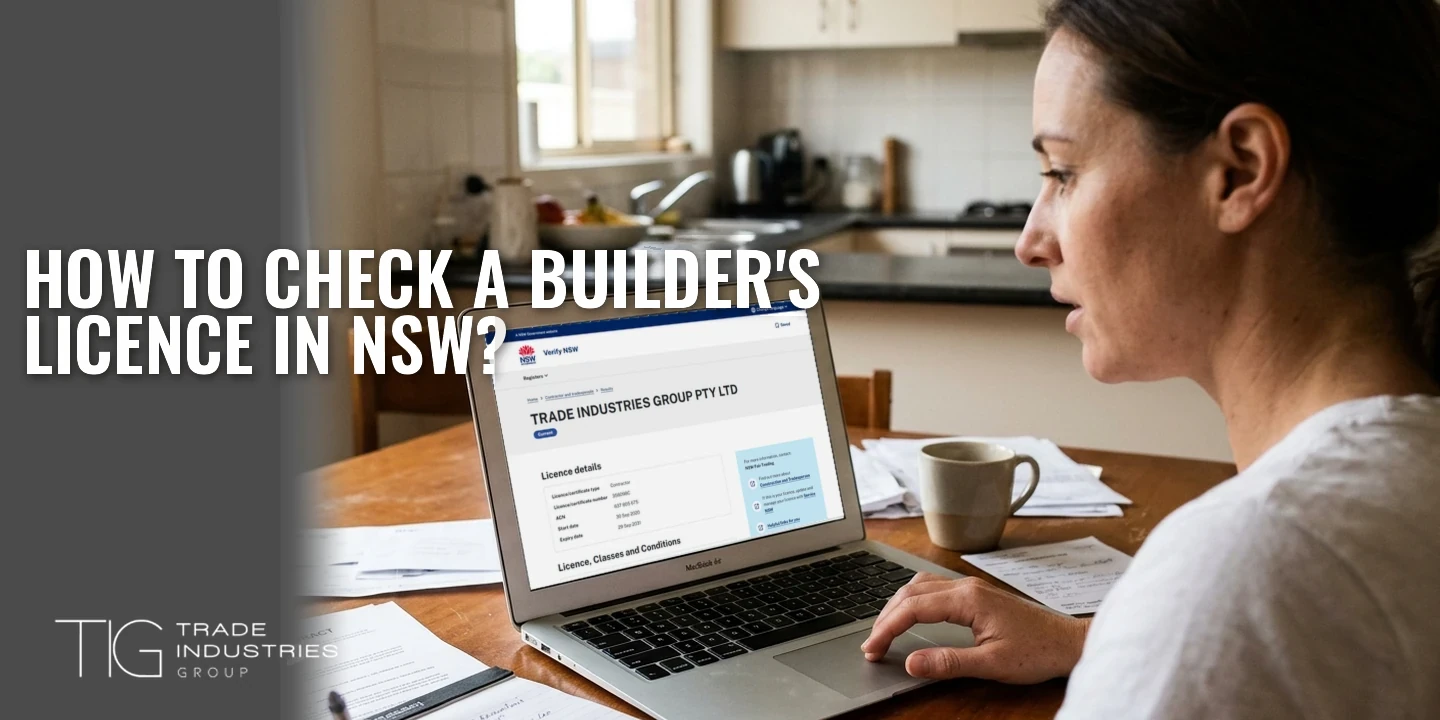
Before you go further, check any builder’s licence on the Service NSW licence check. TIG holds NSW builder licence 358098C.
Not sure where to start? Request a Free Consultation with TIG for no-pressure, no-jargon advice on what is possible for your site. You can also call 0468 013 922.
Frequently Asked Questions
1. Do I need an architect to draw house plans?
Not always. Complex sites, heritage homes and very custom designs often suit an architect. Many renovations are well served by a building designer or a design and build team, as long as the plans meet NSW council approval rules.
2. How much does it cost to have an architect draw plans?
There is no single figure. The cost depends on the size and complexity of the project, the site, and how much of the design process you want the architect to handle. Ask for a written fee proposal that lists what is included before you commit.
3. What are the 7 stages of construction?
The stages usually run from planning and approvals through site preparation and structure, then services, finishes and handover. The exact number of stages depends on who describes them. Your builder will set out the stages for your project and explain how each affects timing and cost.
4. What is the correct order of construction?
The usual order is planning and approvals first, then structural work, then plumbing and electrical, then walls, ceilings and finishes. The order for your home depends on the scope and the existing structure. A builder can walk you through the sequence early, which is a good reason to speak to one before plans are final.
5. How to find a good builder in Sydney?
Start with a licence check on the NSW Government register, then ask for recent projects similar to yours. Read reviews, speak to past clients if you can, and compare written scopes, not only prices.
 What Should I Prepare Before Contacting a Builder in Sydney?
 Do I Need Council Approval for Internal Renovations in NSW?
About the Author: Trade Industries Group