 See What’s Possible for My Space
Share This Post
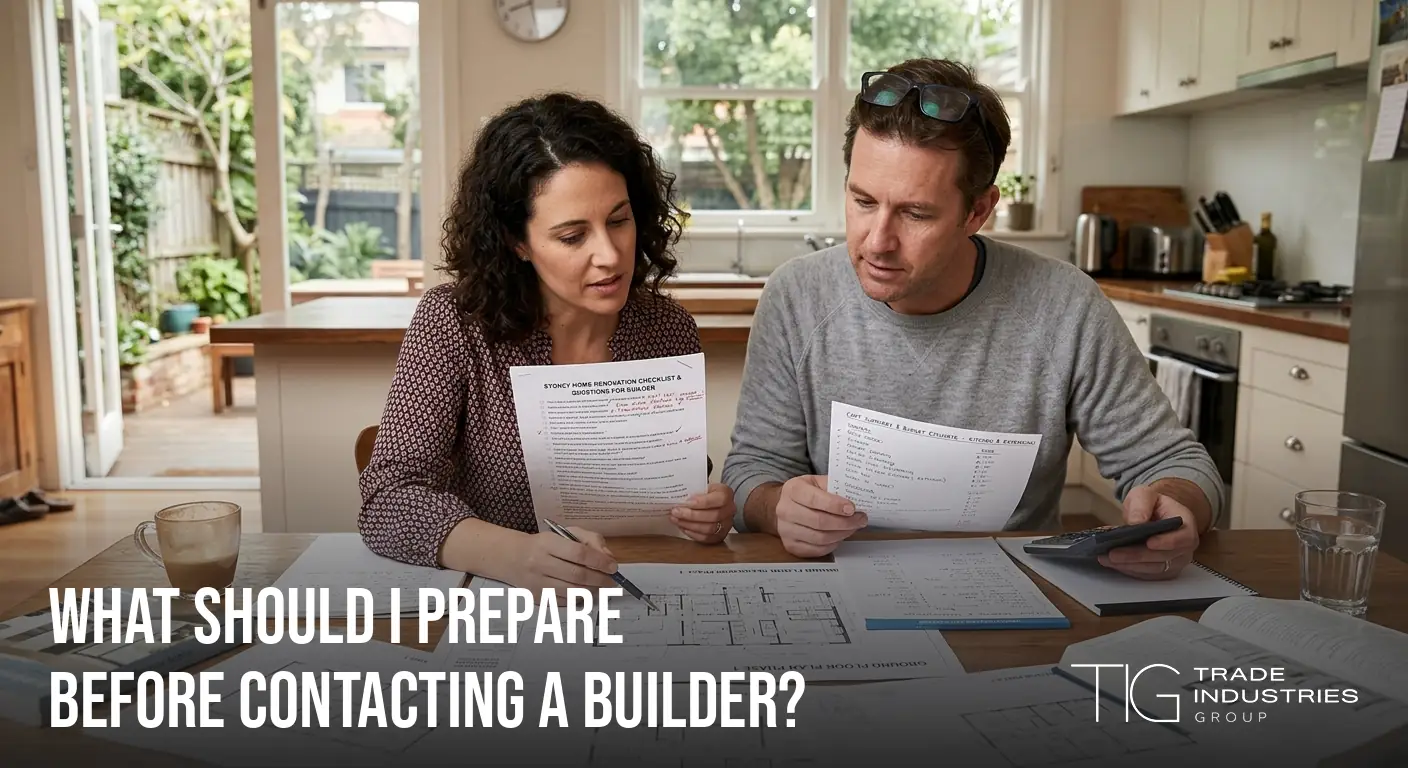
What should I prepare before contacting a builder? Write down what you want to change, why it matters and your preferred timeframe. Have your property address, a few photos and any existing plans ready to share. You can still start the conversation without completed drawings or approvals. The first discussion helps identify what information and next steps your project needs.
Trade Industries Group starts with a Discovery Call about your home, your goals and whether the project is a good fit. An onsite assessment and scope clarification follow, and detailed scope, timing and costs come later. A little preparation gives you a clearer first discussion and a better understanding of the next steps.
Key Takeaways
- Plan for the whole project, including design, approvals, engineering and furnishings.
- You can start the conversation without completed drawings or approvals. A short note on your goals, your address and a few photos are enough to begin.
- Allow for unexpected costs and discuss an appropriate contingency with your builder.
- Approval requirements depend on the proposed work and the property, so ask which pathway is likely to apply.
- Check the builder’s licence, and check insurance separately.
- Where home building compensation cover is required, the certificate must be supplied before the builder asks for or takes payment and before work starts.
What Budget Should I Set Before Contacting a Builder?
Before you contact a builder, think about your total project budget, not just a construction figure. Sydney renovation budgets usually include design fees, council or certifier fees and engineering reports, plus furnishings on top of the build itself. A rough range is enough to start the conversation.
A clear total helps a builder advise on what is achievable and makes quotes easier to compare. An honest range works far better than asking for “as cheap as possible”, because a builder can then recommend materials and layouts that suit your limit. If you are still working out the numbers, start with our guide to budgeting for your next renovation.
How Should I Allow for Unexpected Costs?
Allow for unexpected costs and discuss an appropriate contingency with your builder. A contingency is an amount set aside for costs that cannot be known until work starts. How much is appropriate depends on the scope of the project, the condition of the existing home and any risks that are still unresolved.
Older Sydney homes can hide structural problems, outdated wiring or asbestos behind walls and ceilings. SafeWork NSW sets the rules for managing asbestos, and removal can add both cost and time. Talking about these possibilities early helps you plan for them.
What Information Should I Gather First?
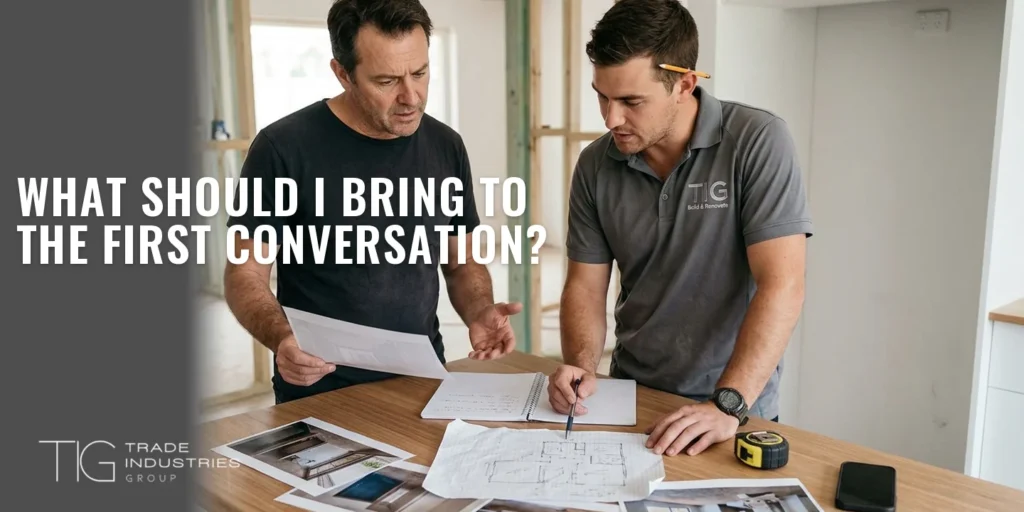
Before you contact a builder, gather the details you already have: your property address and suburb, a few photos of the areas you want to change and a short note on how you want your home to work better. Inspiration images help too. Plans, surveys and technical reports are useful if you already have them, but you do not need to commission them first.
Even rough sketches and clear photos give a builder a useful picture of your home. Available site details support the assessment and later pricing.
Useful items to bring:
- Property address and suburb
- Property type: house, apartment, townhouse or other
- Whether you own the property or are considering buying it
- The main problem you want the renovation to solve
- Photos of the areas to be changed
- A list of must-haves and nice-to-haves
- Your preferred start and finish window, and whether the dates are flexible
- Any known strata requirements, heritage restrictions or site concerns
- Floor plans, a site survey or technical reports, if available
If your project starts with a single space, our kitchen renovations and bathroom renovations pages show what a typical scope includes.
Do I Need Council Approval Before Contacting a Builder?
You do not need approval before contacting a builder. Which approval applies, if any, depends on the proposed work and your property. Some minor work may be exempt development. Other work needs a Development Application (DA) through your local council or a Complying Development Certificate (CDC). Both are lodged through the NSW Planning Portal.
Work approved under a development consent also needs a construction certificate before building starts. A CDC combines the planning approval and the construction approval in one certificate.
A BASIX certificate, which covers water and energy efficiency, is also needed for new dwellings. It generally applies to qualifying residential alterations and additions valued at $50,000 or more, and whether it applies to your project is confirmed case by case. When preparing for your first conversation, mention any heritage listing, flood zone or bushfire overlay, as these can change the answer.
How Do I Check That a Builder Is Licensed and Insured?
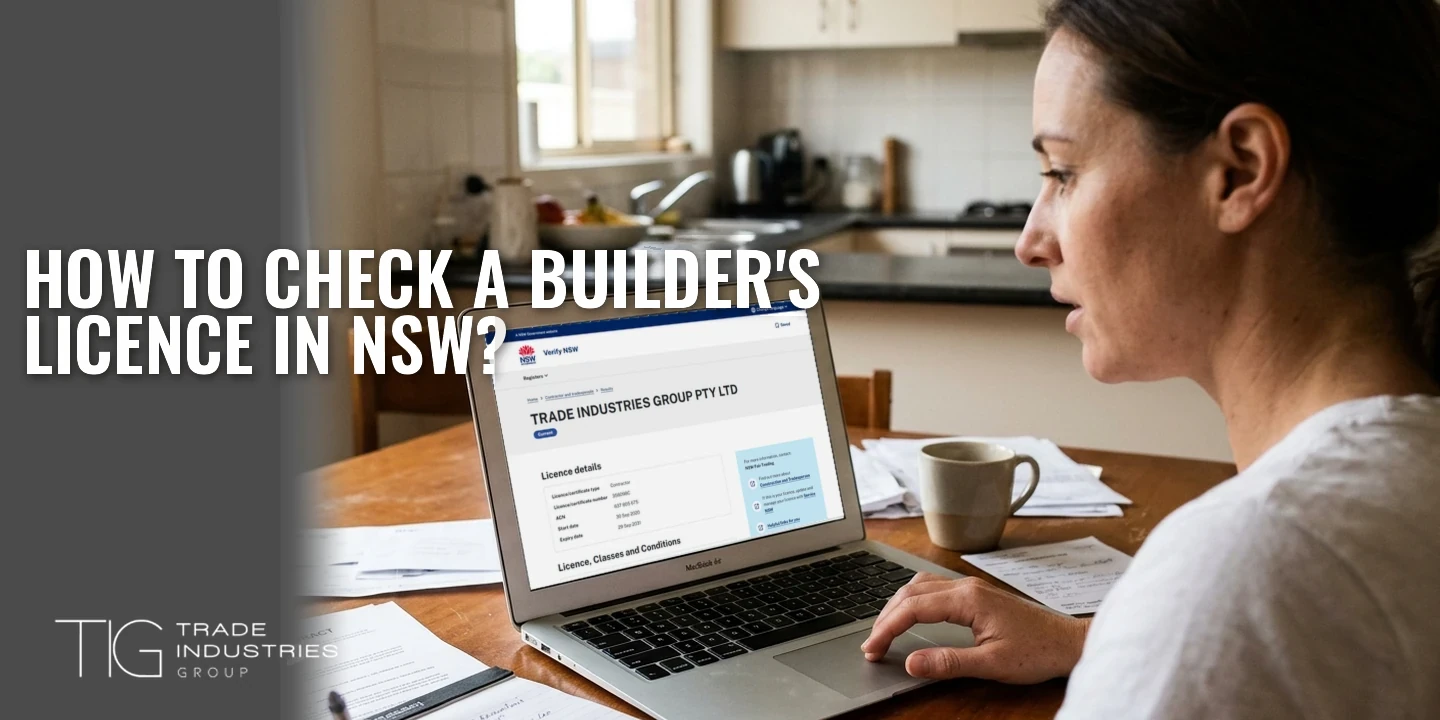
Check the builder’s licence number on the Service NSW licence check before you share detailed plans or sign anything. Under the Home Building Act 1989, residential building work above a set value must be done by a licensed contractor under a written contract, so this simple check helps protect your home and your investment.
A licence check does not confirm insurance, so ask about that separately. Where home building compensation cover is required, ask whether the builder will arrange it through icare. The certificate must be supplied to you before the builder asks for or takes any payment, and before work starts. Confirm current dollar thresholds with NSW Fair Trading, as they can change.
What Questions Should I Ask a Builder in Sydney?
Ask about licensing, insurance, experience with similar projects, how variations are priced and who will be on site day to day. These questions show how a builder works as well as what they charge. You do not need to cover them all in your first call.
Strong questions to bring:
- Can I see recent projects similar to mine?
- How are variations and provisional sums handled?
- Who manages the site and communicates with me?
- What is included and excluded in the quote?
- How are progress payments structured?
Our comparison of DIY versus hiring contractors also explains what a professional builder takes on for you.
What to Bring and How It Helps
| Area | What to bring | How it helps |
| Budget | A rough total range that includes design, approvals and unexpected costs | Helps the builder advise on what is achievable |
| Scope | A short note on your goals and photos of the areas to change | Gives the first discussion a clear starting point |
| Property details | Address, property type, ownership status and any known strata, heritage or site concerns | Helps identify the approvals and next steps for your home |
| Timing | Your preferred start and finish window, and whether the dates are flexible | Helps discuss what is realistic |
| Builder checks | Licence number, insurance questions and references to ask for | Helps you compare builders like for like |
Walk Into Your First Conversation Ready
Before you contact a builder, write down your goals, must-haves and timeline, then gather your address, photos and any plans you already have. Find out which approvals may apply, and mention any strata, heritage or site concerns. Allow for unexpected costs and discuss an appropriate contingency with your builder.
When you shortlist builders, verify each licence on the Service NSW licence check and confirm it covers the work you need. Preparation will not answer every question, but it gives you a clearer first discussion and a better understanding of the next steps.
Ready to Plan Your Renovation?
Have some ideas but still working through the details? Book a Discovery Call with Trade Industries Group to discuss your home, priorities and the next steps for your renovation.
Not ready to book yet? Explore our home renovation services to see how we approach full-scope renovations across Sydney.
Frequently Asked Questions
1. How to find a good builder in Sydney?
Start with a licence check on the NSW Government register, then ask for recent projects similar to yours. Read reviews, speak to past clients if you can, and compare written scopes, not only prices. A good builder explains what they would do and why.
2. What questions should I ask a builder?
Ask whether they hold the right NSW licence for your type of work, what insurance they carry, and how they handle variations and delays. Ask who will manage the site day to day and how often you will get updates. Get the answers in writing.
3. What not to say to your contractor?
Avoid vague instructions like “just do whatever it takes”, and don’t hide your real price range or timeframe. Rough honesty works better, because the builder can then suggest options that suit your limits. Also avoid agreeing to extra work verbally, because changes should be written down.
4. What are red flags in construction?
Watch for pressure to pay a large deposit upfront, no written contract, and an unclear scope. Other warning signs are a builder who can’t show a current licence or insurance, or who avoids questions about variations and delays.
5. What is the average cost to build a house in Sydney?
There is no reliable average, because cost depends on the size, design, site conditions and finishes. A quote based on your plans and a site visit gives a far more accurate picture than a general figure.
 How Long Does It Take to Renovate a Kitchen?
 Do I Need Plans Before I Speak to a Builder in Sydney?
About the Author: Trade Industries Group